

My friend came to me the other day about her bookkeeping.
“Is it just organizing numbers, right?”
“ No, it’s quite a bit more than that. Why do you ask…”
“Well, my accountant says my bookkeeping is completely messed up, and I have to pay them to untangle it all so I can get my taxes done.”
Tell me more… She came over, and we scanned through her 600+ uncategorized transactions for the year because she was scared and didn’t want to do it wrong a second time. We sat for 2 hours, going through any questions I had, talking through her system, and figuring out how we can make this work for her. Some are totally maxed out on time and yearn for clarity so they can grow into the thriving business she knows they can have. Eventually, she wants to do a nonprofit. Numbers are holding her back, and for me, that is an easy fix.
To untangle this spaghetti bowl of transactions, I go back to basics. How are we going to categorize? How are we going to sort? What is Schedule E? What is Schedule C? What will make your accountant’s life easier?
Chart of Accounts with a numbering system is music to my ears. It makes my heart sing; the clouds part, and I can see in an instant how we'll make this happen.
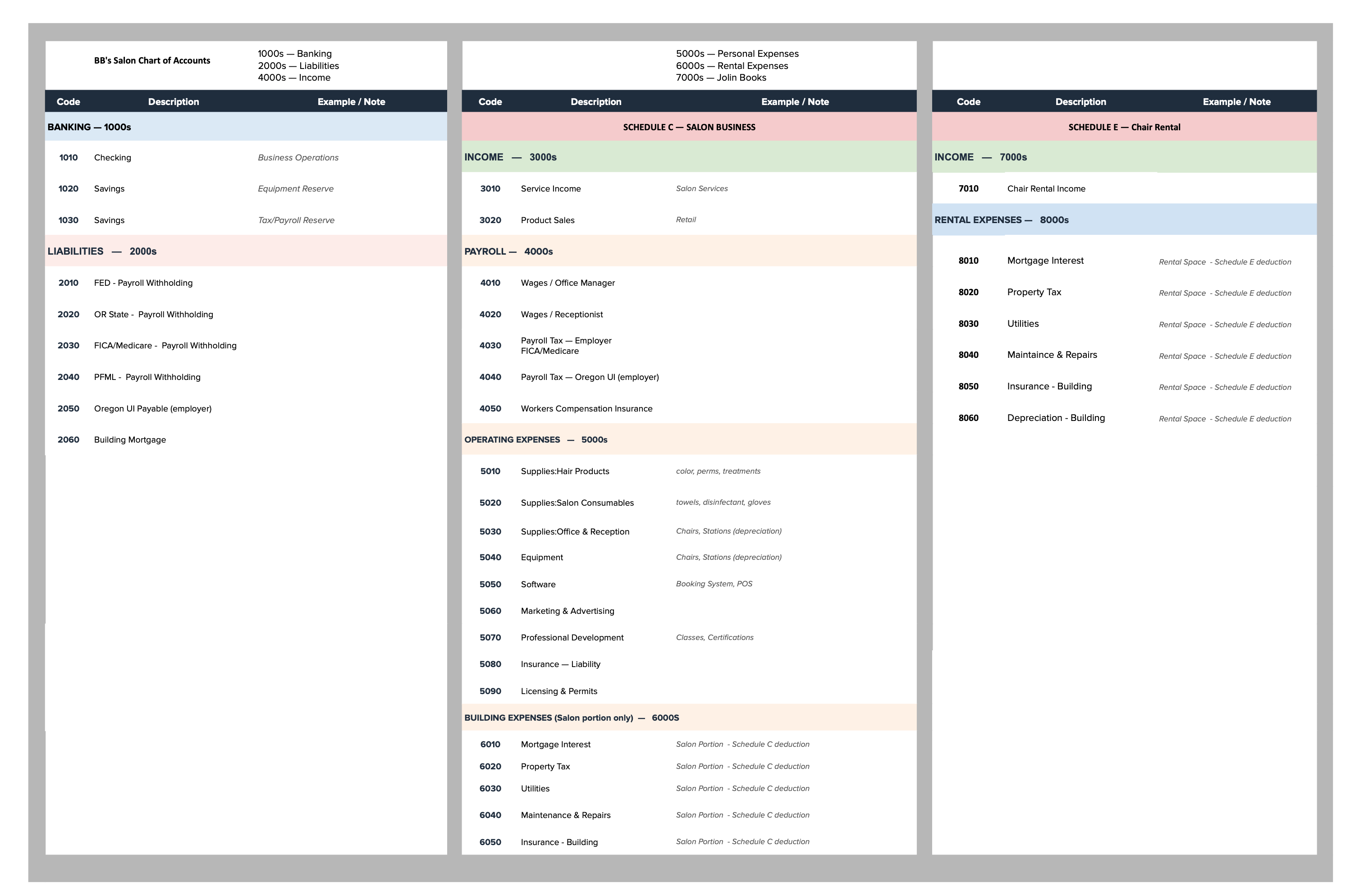
Now we have our template; we’ve chatted with the accountant and confirmed this system will flow well with their system, and we are off. Let’s walk through it together.
Start with Banking; this is where the checking accounts and savings accounts will go. If we have a line of credit or credit cards, they will go under liabilities. One thing I love about the number system is that it can grow, and the company grows. This one is super simple: no line of credit and just a mortgage. This payroll withholding and any credit will go to Liabilities.
This person has income portals. Her personal business, styling hair and selling products, will go on her Schedule C. She also owns the building and rents out chairs to her colleagues. They are 1099s, and that income will go on her Schedule E. That is why we separated out the two income streams so they can go to the correct place for taxes. We will split a lot of her building deductions 60/40.
That is a little insight into the way I approach bookkeeping and cleaning up a messy categorizing system. For the record, messy books happen. When I started doing my bookkeeping in 2010, I had 2 businesses, and it was messy. Creating a system, having a cheat sheet for when you forget, and following it to the T works. Then, over time, we can create clean, clear reports that will make your heart sing too!