

I first dipped my toe into the world of payroll in 2006, and I was a freelance (1099) studio manager. I had a day rate, and that is what I was paid. But by definition, I was really an employee. I was there regularly, I did the same tasks, and I worked about 20 days a month. When my employer was forced to make me an employee, he was pissed. He threw a 3-year-old temper tantrum as a 65-year-old man. He made me an employee, but lowered my day rate by the amount of taxes the employer was obligated to pay. Totally illegal. In protest, I refused to submit my time card until he agreed to pay his portion of Taxes, FICA (Social Security Tax), FUTA (Federal Unemployment Tax), SUTA (State Unemployment Tax), and Workers’ Compensation Insurance.
Here is a great article about W-2 vs. Employee
After 1 month of protest, we had an agreement; I was an employee, paid the same rate, and had all the benefits that come with being an employee. This was the path to me buying my first house, a triplex in 2009.
I break down payroll into 5 simple steps. I can not own this; it is part of the QuickBooks program, it makes sense, and I love it.
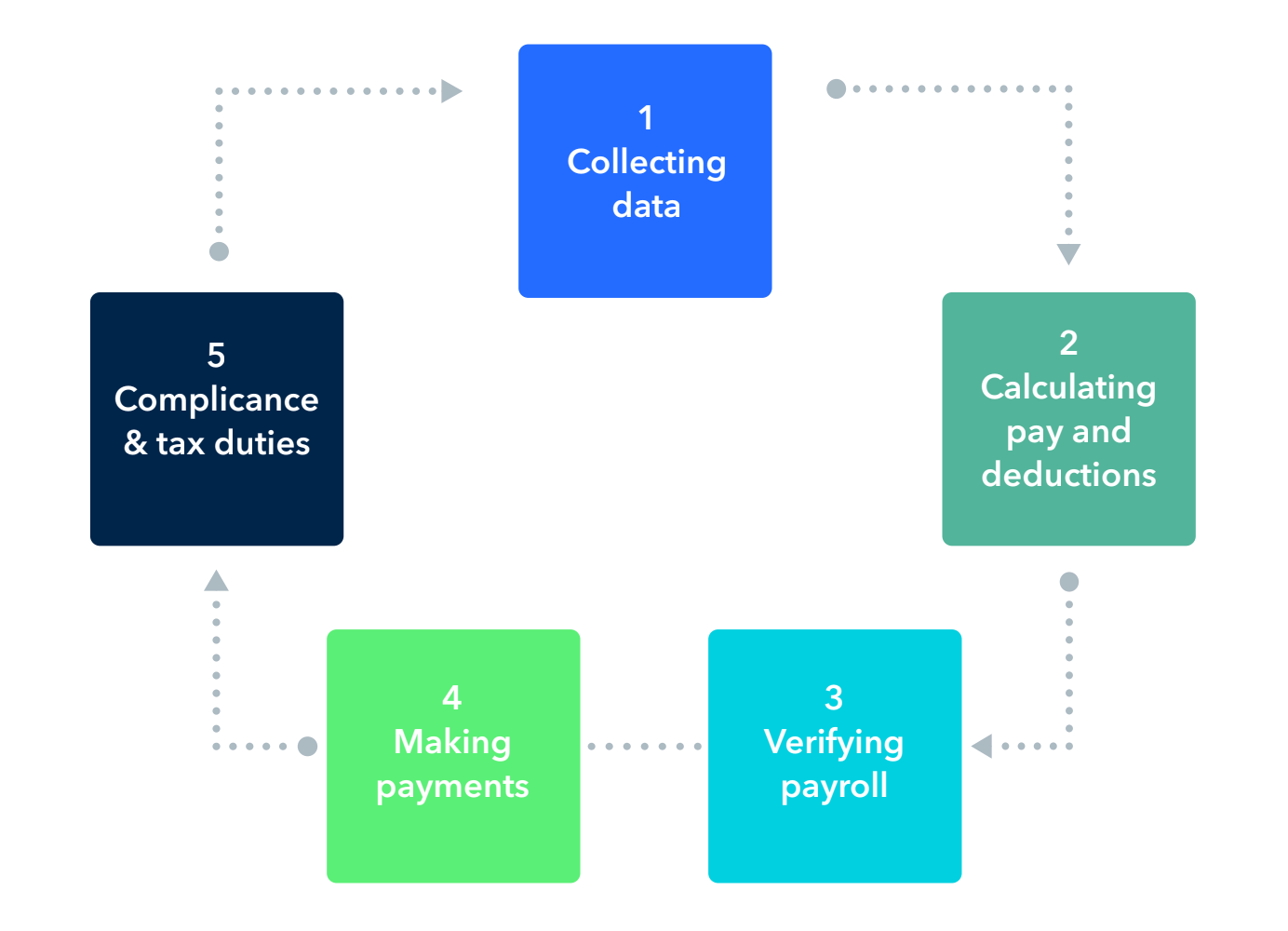
Collecting Data. That is employees' logged hours. That in itself can be a feat. There are apps and tools like Homebase; it is free up to 10 employees. Or, for the most seamless option, there is the QuickBooks Time app. Here is more about QuickBooks Online Payroll. It is an upgrade from just doing payroll; employees have an app to clock time and mileage that automatically syncs with our payroll systems, and there is much less room for error. Gross Pay is Hours worked x hourly pay. Or annual base salary / number of pay periods per year.
Calculating pay and deductions. This is where we move from Gross Pay to Net Pay
Subtract Pre-Tax Deductions: Traditional 401(k) or 403(b), health, dental, vision, FSA, HSA, or commuter benefits. Gross Pay - Pre-Tax Deductions = Adjusted Gross Income (Taxable Wages).
Calculating Mandatory Tax Withholdings. This gives us our Adjusted Gross Income, and we use our AGI (Adjusted Gross Income) as the taxable base for FIT (Federal Income Tax) / FICA (Social Security + Medicare). Social Security (6.2%) + Medicare (1.45%) + Federal Income Tax. This is where we have a payroll liability account. Taxes include both employee FICA + FIT and employer FICA + FUTA.
Subtract Post-Tax Deductions. This is where we deduct wage garnishments or ROTH contributions. These do not reduce the taxable income. They are subtracted after tax is calculated. This is your Roth 401(K) or Roth IRA, Court-ordered wage garnishments (child support or tax levies), union dues, optional post-tax voluntary benefits, or charitable contributions.
Arrive at Net Pay. This is our final amount due to the employee on payday.
Verifying Payroll. I process payroll at least 3 days before it is due to triple-check and catch any mistakes. QuickBooks Elite does same-day deposit if done before 7am.
Payments. Dolla Dolla Bills. I use direct deposit; this reduces the chance a check could get lost or damaged, and it is super timely.
Compliance & Tax Duties. This is a very important part, and it's where I find the system really shines. There are 2 ways of handling this. Both include a payroll liability account where money is moved in the chart of accounts and put into the Payroll Liability Account.
QuickBooks Impound. QuickBooks takes these funds on payday, holds them, and pays the appropriate places on time.
Businesses hold and transfer tax payments through an online government portal or remit payments to the IRS and state agencies. Electronic Federal Tax Payment System
Systems work. Whether it’s my routine, money dates with my husband, or bookkeeping systems, they help a business run more accurately and, in turn, more profitably. I am a systems builder—it lights me up.
Do you run a business, pay people, and know there’s more coming in than going out, but scramble every January to get everything lined up? Or maybe your bookkeeper is leaving, or you have no idea what a balance sheet is? Let’s talk!